
So you’ve cut out a rabbet, and you want to cleanup the “bottom” …. If you used a circular marking gauge, the round cutter serves as a knife to mark the line – but it can also serve as a light blade. By resting the fence of the gauge on the reference face, you can clean up the bottom of the joint by using sliding the cutter head around holding the fence firmly on the face. You won’t use this to remove a lot of waste, rather you can remove most of the waste with a chisel and just clean up the last hairs breadth with the gauge. We used this technique in a session of making the winding sticks at my last Woodcraft class . Not everyone has the rabbet planes, or the router planes (yet!), but almost everyone is using circular marking gauges, so this helped out.
And bonus, to glue in the strips, we used epoxy mixed with black dye to obfuscate any edges that weren’t as pretty as we liked. The end results are pretty good, if I do say so myself!
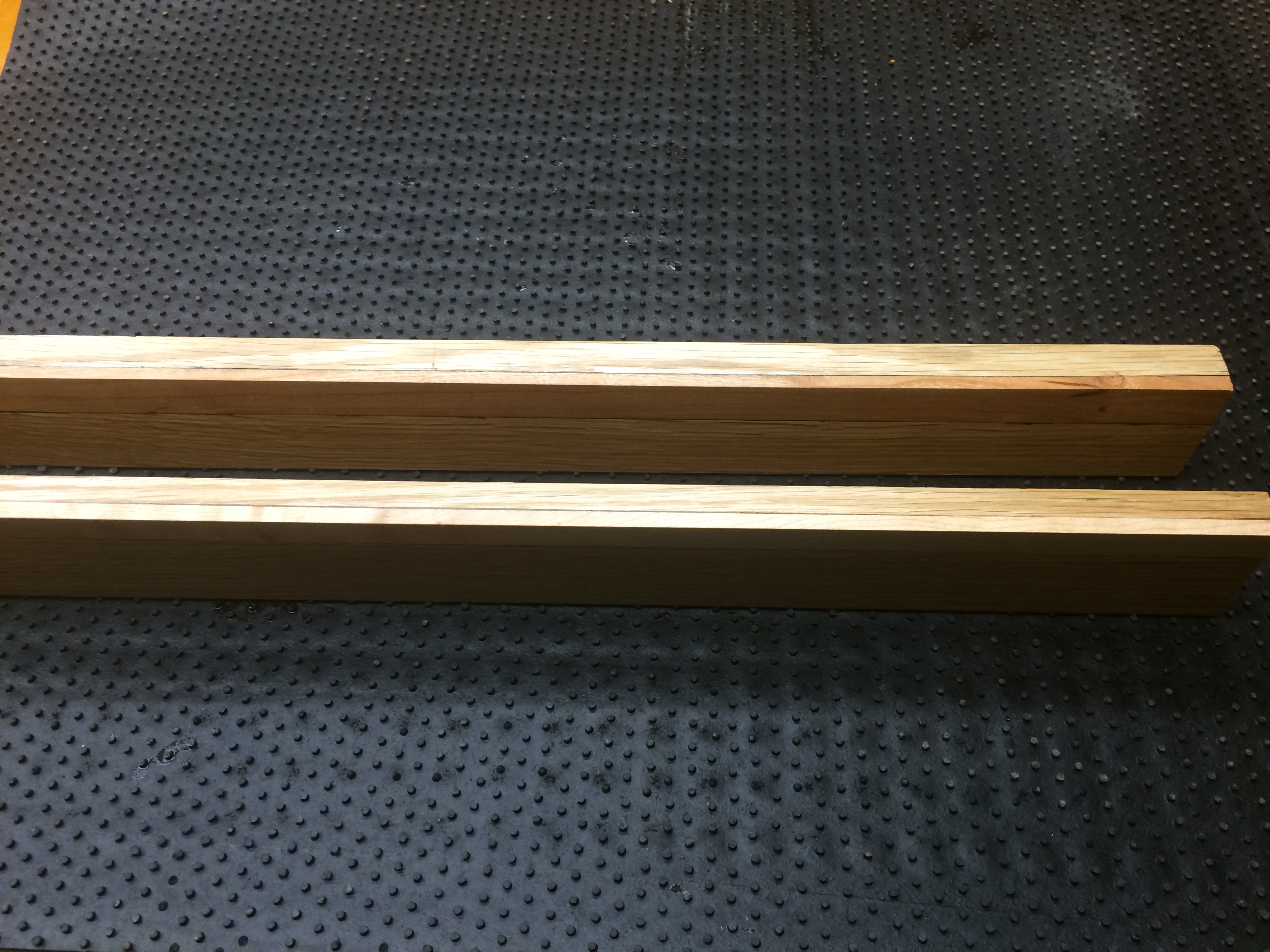

photos courtesy of Joe Ireland



 As I continue to work on a small cabinet to hold baskets for my daughter, I’m doing some focus exercises on my dovetails. I teach a hand cut dovetails class at Woodcraft, but I’m no master like Mr. Cosman. Because I don’t do this professionally (outside of teaching), I take every new project with dovetails as a chance to improve my technique. The critical points for the tails is that 1) they are perpendicular to the face of the board, and 2) they stop exactly on the scribe line. By taking the time to practice, I’m trying to continue developing muscle memory, which is a hard thing to do if you don’t do them all the time. And anyways, I don’t know if I’ll ever get to the point that speed becomes an focus, because I do this for fun not for profit.
 daughter asked for – it’s just basic pine from the home store. I glued up a couple panels to make the carcass and was cleaning up the glue line with a scraper and smoother.
 Another saw from
  Another holder I needed to update
 was the scraper holder that sat on the shelf I removed. The original holder was a hunk of 2×4 that was kerfed on the table saw, and attached to a base plate. This worked well (and took up very little space), but wouldn’t work on the wall as well. (Or maybe it would, I may revist that later 🙂 ).
 Brian's Workbench